

I was wearing a dark business suit with no tie to Shu Lin’s podcast, The Real Reason, live recording. There were many businesspeople, consultants, professionals in the wealth management industry, and lawyers. Seeing lawyers at that event was not surprising at all. My friend is on her second podcast and her first podcast was interviewing lawyers called After The Bar.
It was a good crowd. I sat beside a lawyer who asked me which firm I was from. When I told her, she was surprised. She expected to hear a law firm especially with my midnight blue business jacket. I later had chats with a few other lawyers who attended.
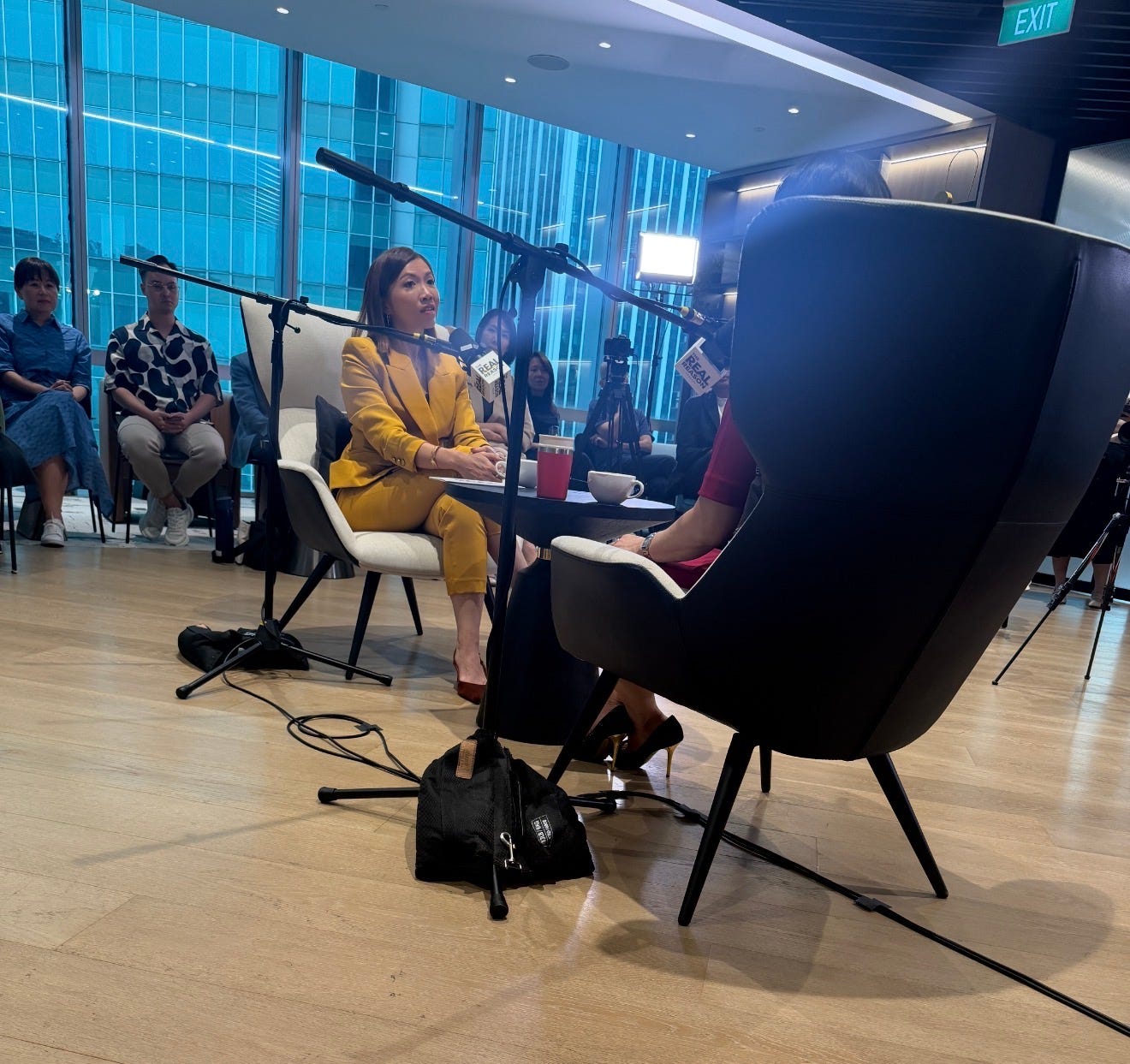
The podcast episode that inspired this week’s essay.
When I was on the way home, I was thinking about the life that could have been. When I was younger, legal dramas such as The Practice and Boston Legal were my favorite shows. Several aspects were attractive like the intense courtroom drama and the clever use of the law to fight for their clients.
I liked the work that lawyers did. They seemed like trusted advisors and seemed to do important things. The work and lifestyle seemed glamorous. But I was not focused in school when I was younger. Going to law school in Singapore needed very good grades. Going overseas for a law degree was never an option. It was too expensive and I likely could not go in based on my grades anyway.
My life took a different turn. I enjoy my work as a wealth advisor to high net worth individuals. It fulfils me and allows me to utilise my own unique talent stack and fits my personality. But sometimes like that day, I would think about how my life would be as a lawyer.
I cannot say that I chose not to be a lawyer. That option was never open to me. My own choices, indifference to studies and school in my younger years made it unlikely that I would be a lawyer.
The author Daniel Pink surveyed thousands of people about their regrets for his book The Power of Regret. He found the answers sorted into four recurring types, foundation, boldness, moral and connection. I found that book useful in clarifying that we all have regrets and it was useful in highlighting my type for this case which was foundation regret.
When I read the pattern, it was all so familiar. The pattern was described as “If only I had done the work”. Foundation regret is not about one single decision, but rather from many small choices.
I could have studied more rather than watch football or play basketball. Reading more would have been better than watching TV all the time. Hobbies like computer lab might have been better for me in the 1990s and prepare me for the working world. Youth is not an excuse. Many friends were the same age as me but were more focused than me. They knew what they wanted and went for it. Even if it meant giving up party sessions or hanging out, they were fine with it. I tended to drift more and dabbled into a range of activities but was never focused enough in what I did.
My ability to drive myself forward came later in life.
Singaporeans treat education as a very important part of life. It allows people to change family circumstances in one generation and it is an important driver of social mobility.
The psychologists Neal Roese and Amy Summerville found that regret about education sits above career, parenting and romance. It is the single heaviest regret domain in life. Their explanation was that regret runs strongest wherever a person can still picture room to have acted differently.
The act of picking up the textbook and going through class notes consistently is something we ought to do when we were young students. But not doing so and not getting the grades we need to have for the goals or vocations we wanted, can sting a lot. The “what if” feeling is very real. Much like the feeling of me thinking of being a lawyer.
The psychologists Hazel Markus and Paula Nurius described what they called possible selves, the pictures a person carries of who they might become, would like to become, or are afraid of becoming. A possible self of me back then might have been a lawyer today. A casual remark from an acquaintance created so much thinking and recollection on the same day.
Possible selves when I was younger seemed limitless. It felt like I could achieve so many things. Some possible selves when I was younger are what I am now. For example, I write on various platforms and manage money. But there are possible selves that I could be in the future. But I felt that the number of possible selves seemed to go down as I get older.
There are many things that I am grateful for such as the life I have, the opportunities that have come my way and the meaningful work that I do. I do not know if more effort back then would have changed the outcome. I will never know. What I know is that it took only an acquaintance’s question to bring the other life back for an evening.
This article is for education only. It does not take account of individual circumstances and is not financial advice.